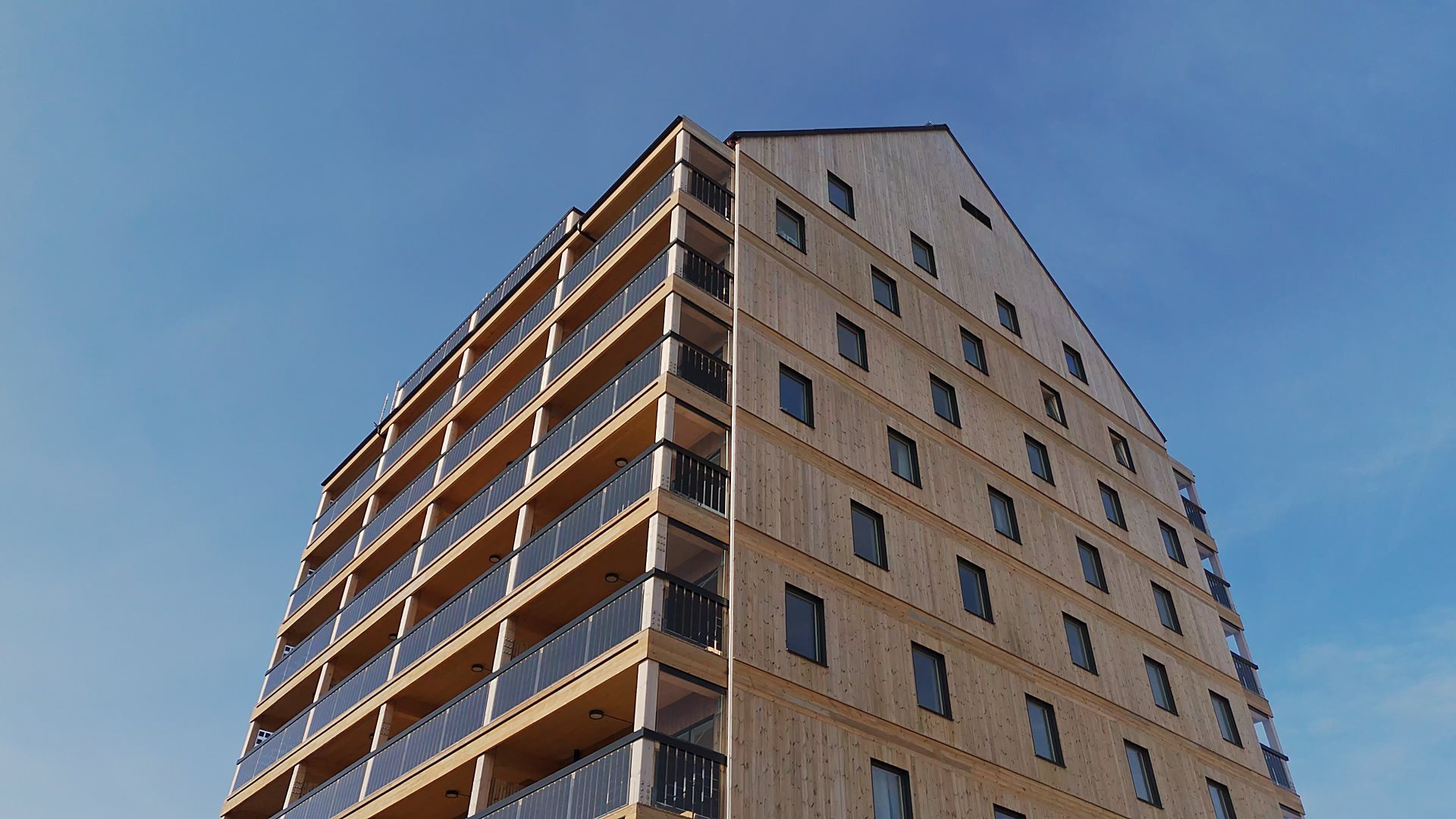


For decades, the housing sector has largely focused on optimising cost, speed, regulations and energy performance. What has received far less attention is a simpler question: what kind of homes do people genuinely want to live in? ETC Hyllie offers an intriguing answer. The project was not conceived in response to market demand, but as an expression of the belief that housing should be built differently. By conventional industry standards, a twelve-storey residential building made with timber and straw might have seemed a risky proposition. Instead, it attracted a community long before it was built and residents who actively chose it once it was completed. That may be the most important lesson of the entire project.
The ambition was stated from the beginning and stayed consistent throughout. "Bio-based materials were always the plan," says Fredrik Fagerberg, CEO of ETC Byggentreprenad. That meant one thing: reduce emissions at every stage and sequester as much carbon as possible in the building.
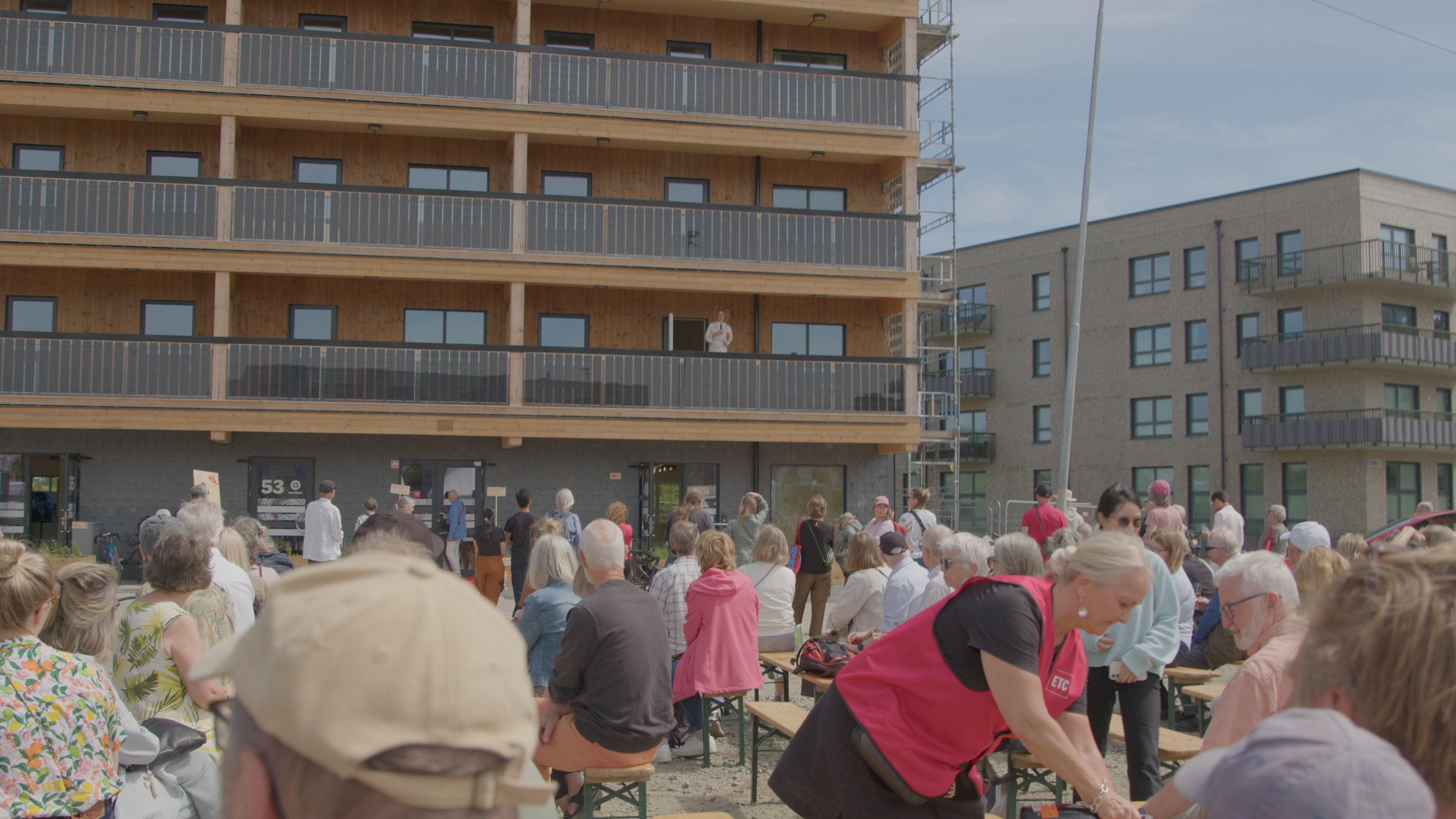
That intent attracted a community before a single floor was built. More than 2,000 people saved money in ETC Bygg to make the project possible. Not because they were sold on a yield. Because they believed in what was being built and wanted it to exist. "It is more like they wanted us to do this than that we were convincing them to support us," Fagerberg says. ETC Bygg is not a typical property developer. For years, it has built a community around the idea that housing can be climate-positive, energy-producing, and built from natural materials. Supporters can save their money through ETC's financing model, helping fund future projects while backing the values behind them.
By the time Hyllie was announced, that community was already there.
This is what pioneering looks like from the inside: a company that had already built smaller bio-based residential projects in Västerås and Växjö, a grassroots community that had followed those projects and was ready to back something more ambitious, and a shared conviction that housing could be built differently. Hyllie is the result of that convergence. Twelve storeys. Sixty-five apartments. ETC designed it to sequester carbon rather than emit it, and to generate more energy than its residents consume. It was financed not by institutions but by the people who wanted it to exist. EcoCocon's straw wall panels form the thermal envelope of that building. But what happens inside those walls, the air quality, the warmth, the sense of something different, is ultimately what the project was always about.
What People Actually Say
When the first residents moved in, the reactions followed a pattern. Ewa Mårtensson, a long-time ETC follower who moved from Lund specifically for this building, put it plainly: "I'm not moving to Malmö. I'm moving to this building, to ETC Bygg. I've long thought that I want to live in a building like this — and I think timber walls are really good for your health."
Annmari Nygren had already lived in an ETC Bygg timber building in Växjö for two years before moving to Hyllie. She knew what to expect. "It feels fresh and healthy to live in a climate-positive building with wood in the ceiling, walls and floor. The indoor climate is fantastic, and everyone who visits actually comments that the air is so good."
Martin Palm, project manager at ETC Byggentreprenad, heard the same thing across earlier projects. "People are always very happy with how the indoor climate is. It's very fresh. It's not too humid or too dry. It's very crisp and nice air quality, and people feel that they're living in a biological house." Fagerberg noticed it himself the moment the panels went in on site. "It directly gives you both maybe a heartwarming and an actual physical warm feeling." This is what compressed straw does inside a building. It is not passive. It regulates humidity, holds warmth, and creates an interior atmosphere that people notice without always being able to define it. The material is doing something. Residents feel it.
Nature in the Walls
For some residents, the draw was environmental conviction. For others, it was something harder to name: the feeling that natural material belongs in a home in a way that synthetic alternatives do not. Douglas and Elin, who grew up near forests and moved to Hyllie from smaller towns, said it simply: "We're both nature people. It's important to us."
Göran and Margareta had been saving in ETC Bygg for several years before moving in. "We like the sustainability thinking and energy-neutral buildings — it feels so obvious," says Margareta. They arrived with tomato and aubergine seeds already sown for the balcony. They had heard there would be peach trees and mini kiwi planted around the building. The balconies were always part of the intention. "We wanted to promote community," Palm says. "You're supposed to have a life here. You talk to people, you interact with others, and we grow together. That's why we have the big balconies — so we can actually grow and connect with other people."
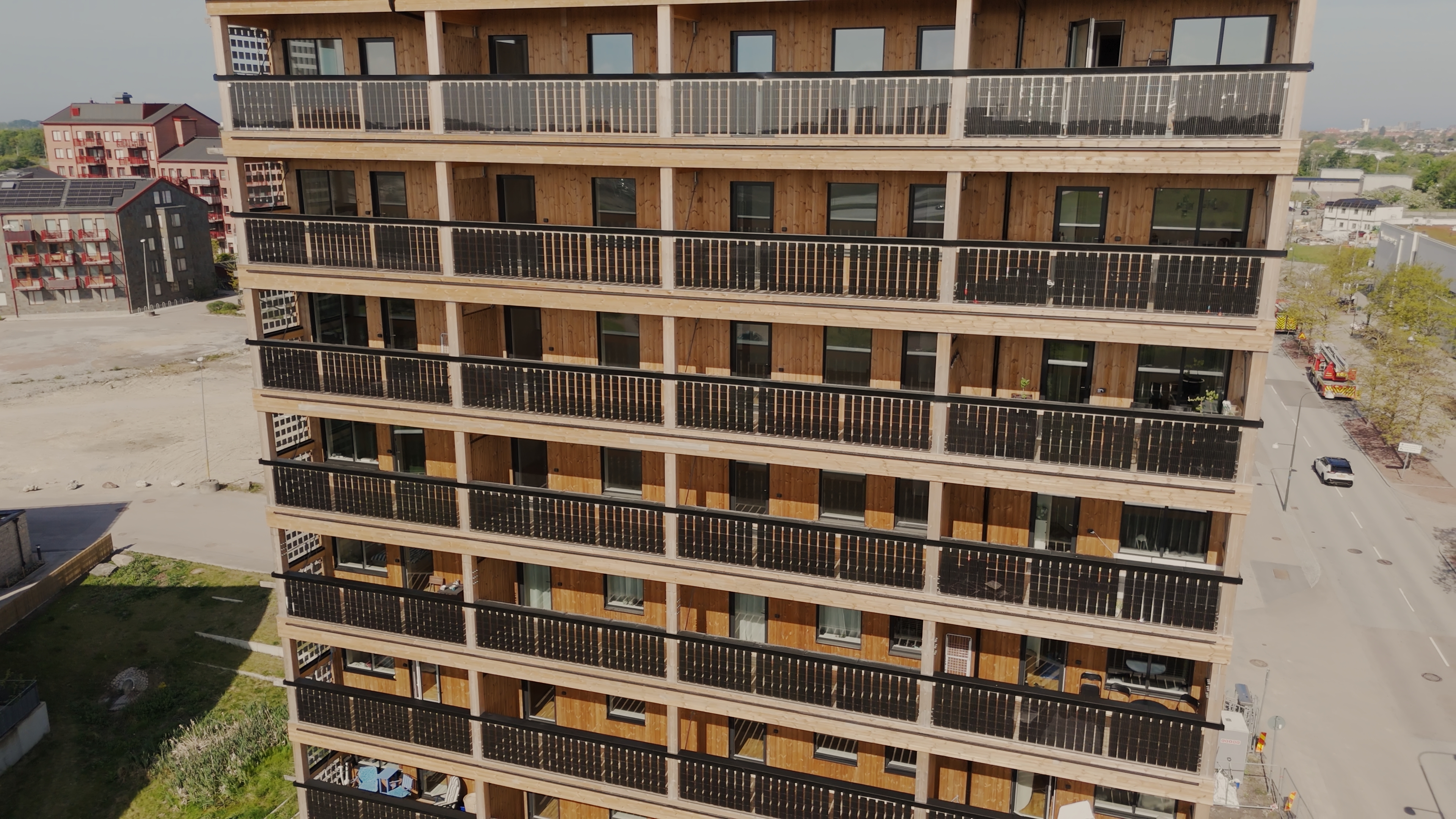
A building that grows food at its edges, generates its own electricity, and breathes through its walls is making a different kind of offer than one that simply provides shelter. That offer starts with the materials.
More Than a House
Martyna Kawala-Olchowik, an architect who moved to Hyllie after researching the project, put into words what many residents had been circling around. "This is more than a house. It's a statement. My dream is that, as climate-positive as this building was built, all buildings should be built this way going forward."
Paul Lynch, who worked with EcoCocon on bringing the straw wall system into the project, frames it simply. When he first said he wanted to build a high-rise straw building, people laughed. "It took a bit longer than ten years, but here it is. We're standing in it, and it's 12 storeys high."
The people who saved up to make it happen and the people who now live in it are both part of the same story. For EcoCocon, Hyllie is evidence of what bio-based construction can deliver in practice, not as a prototype, but as a home. The panels are on the walls. The residents are in the apartments. The building is working.
That is the point.