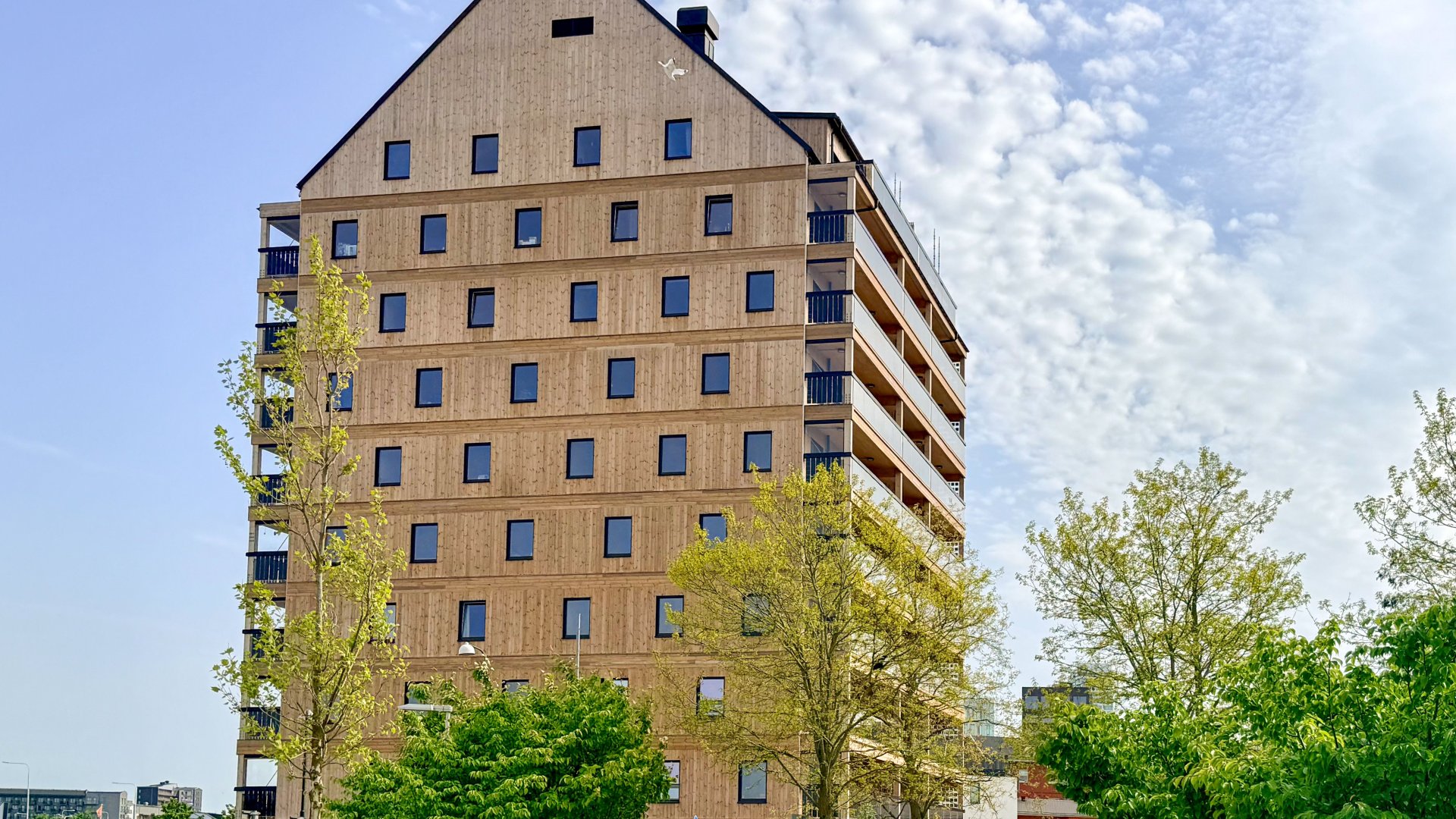


Engineered for Safety and Comfort: How Fire Safety and Acoustics Were Approached in Hyllie
Fire safety and acoustic performance are two of the most common questions people ask when they first encounter large-scale bio-based construction. Both deserve evidence-based answers.
EcoCocon supplied the prefabricated straw wall system used in the building envelope. The overall fire strategy, compartmentation design, evacuation concept, sprinkler specification, and regulatory approvals were the work of the project's appointed design and fire engineering teams.
A system, not a single solution
Like all multi-storey residential buildings in Sweden, ETC Hyllie was required to comply with national fire safety regulations and undergo a project-specific fire engineering assessment: a complete risk calculation of the full building under worst-case fire scenarios, conducted by an accredited fire consultant. No exemptions apply for buildings made from bio-based materials.
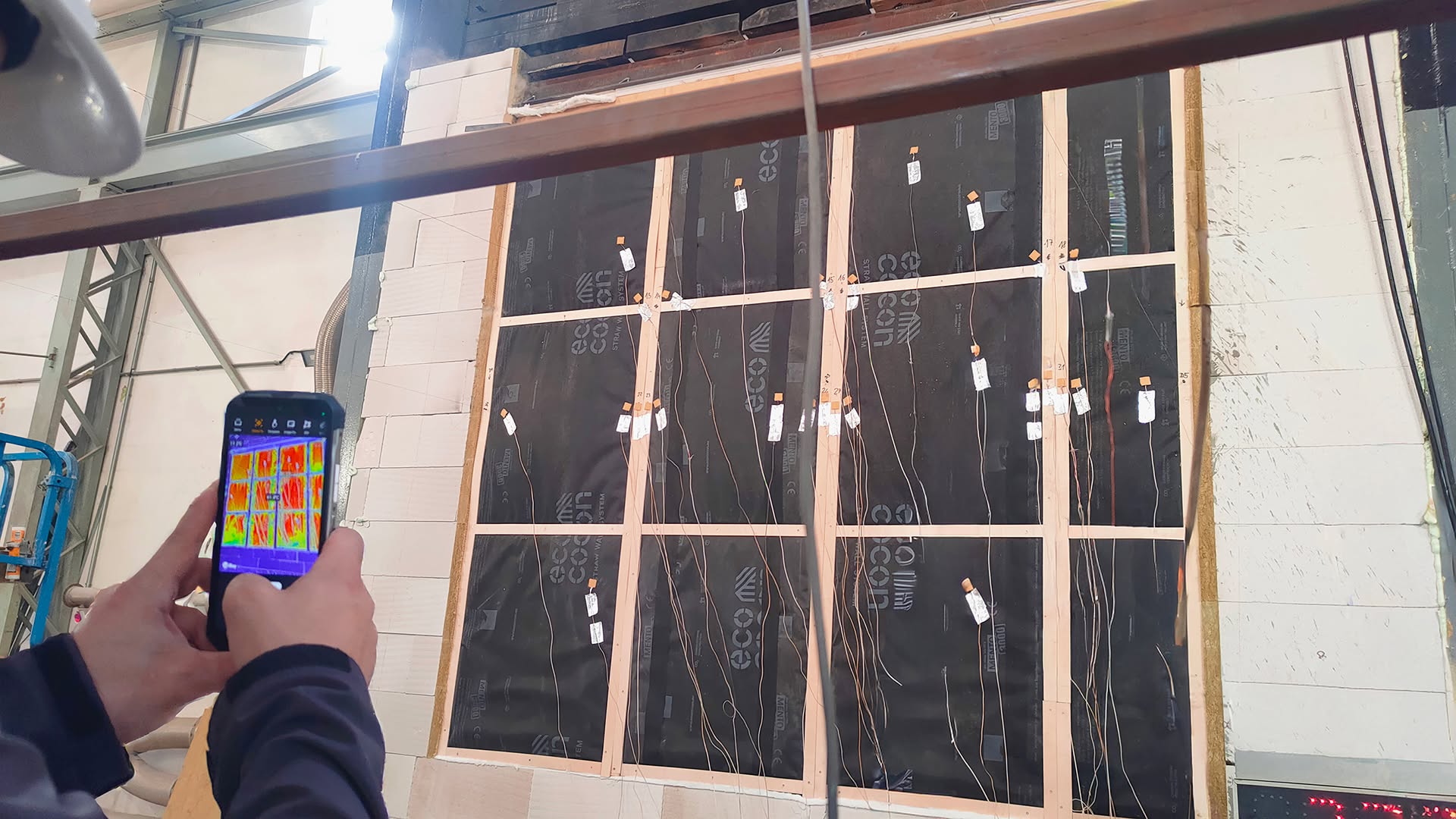
The EcoCocon panels carry REI fire resistance certification, independently tested and verified against three simultaneous criteria: R for load-bearing capacity, tested under a constant load of 70 kN/m; E for fire integrity, confirming no passage of gas to the unexposed side; and I for thermal insulation, limiting heat transfer through the assembly. The standalone panel with a diffusion-open membrane on the external face is classified RE 45 / REI 45 / REW 45: 45 minutes of fire resistance under standardised European test conditions, with fire action on the internal face. The system has also been tested in higher-rated configurations with additional finish layers. Each result reflects the performance of the complete wall assembly, not the properties of straw in isolation. The specific wall build-up at Hyllie was determined by the project's fire engineering team as part of the overall building assessment.
How compressed straw actually performs under fire
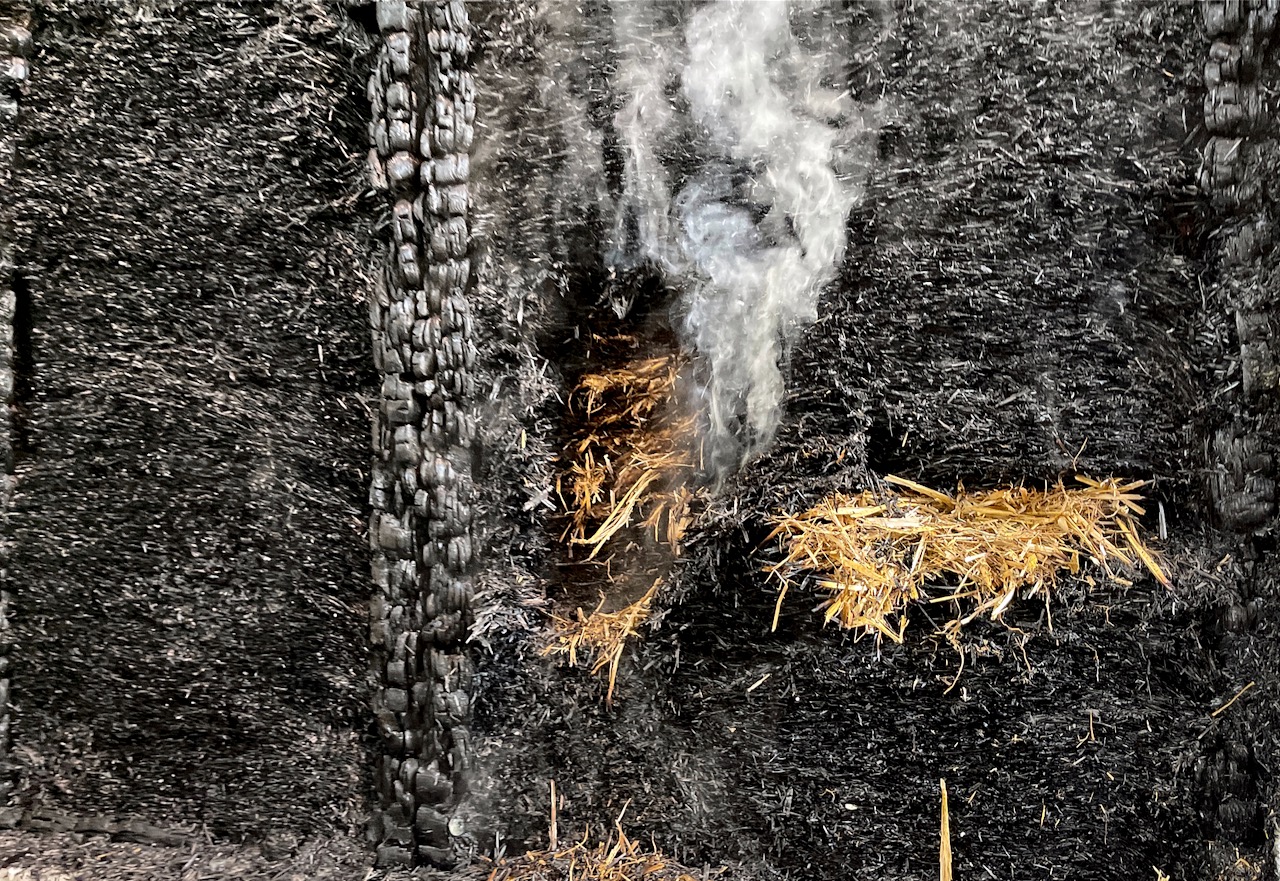
The compressed straw in EcoCocon panels behaves fundamentally differently from loose straw. It is industrially pressed to a density of 115 kg/m³. At that density, minimal space remains for oxygen to fuel combustion. Straw contains a high proportion of silica, a natural fire retardant. Under fire exposure, the material forms a carbonised insulation layer on the surface that slows further combustion. This behaviour is assessed through standardised fire testing of the complete wall assembly.
Independent testing and certification
The fire performance of the EcoCocon wall system is verified through independent testing conducted in accordance with European standards. EcoCocon wall assemblies are used in projects complying with national building regulations across multiple European markets. Full fire test documentation, including the RE 45/REI 45/REW 45 classification report and European Technical Assessment data, is available from EcoCocon.
How the building layers its protection
Inside the apartments, the CLT structure is left exposed. The outer layers of each CLT element are dimensioned to char in a fire, forming an insulating crust that protects the structural core beneath.
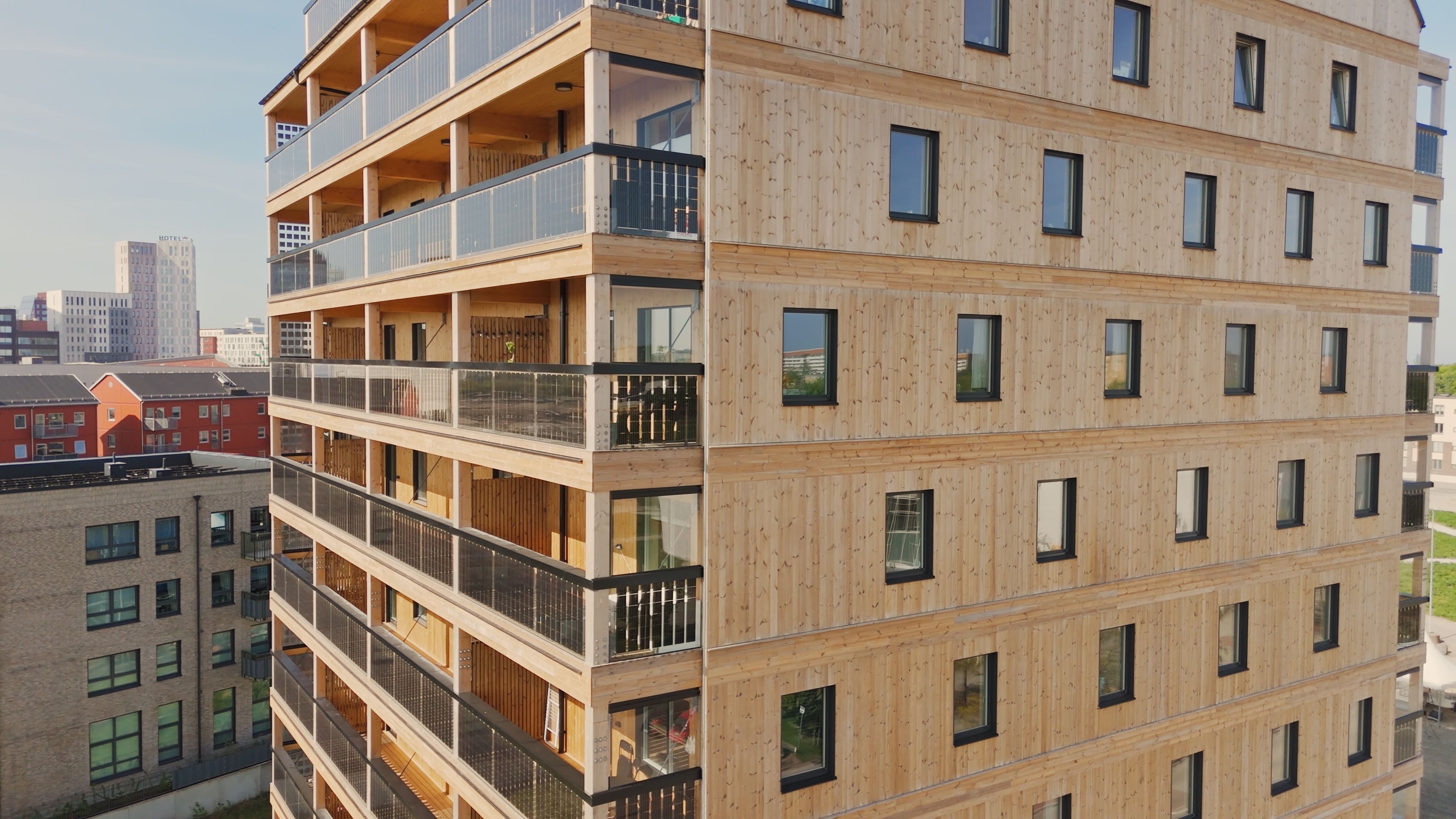
The ventilated facade required specific attention. Fire entering the cavity between cladding and wall can propagate rapidly upward. At Hyllie, a graphite-based intumescent strip set into a stainless steel mesh is installed between every second floor. Under normal conditions, it allows free ventilation. In a fire, the graphite expands and seals the cavity, preventing vertical spread beyond two floors. Fredrik Fagerberg, a developer from ETC byggentreprenad, describes this as a standard product he has used across a decade of projects. The exterior wooden cladding is treated with a fire protection coating selected to meet the required fire performance while aligning with ETC's environmental criteria. On the East and West elevations, five-layer CLT balcony slabs achieve a 60-minute fire rating. The South facade, behind a full-glass solar installation, uses an equivalent barrier adapted to the glazed assembly. A conventional sprinkler system, specified by the fire engineering team, is installed throughout the building.
The question nobody asks until they move in
Fire gets raised before anyone signs a lease. Acoustics surfaces later, when someone discovers that their building transmits noise in ways they did not expect. In timber construction, that concern is not unfounded. Mass timber does not absorb impact sound the way concrete does, and low frequencies travel through a connected structure with very little loss. In Sweden, the bar is higher than almost anywhere in Europe: the national acoustic standard measures performance down to 50 Hz, half the 100 Hz threshold common in most other countries. "Low frequencies are hard to deal with," says Fredrik Fagerberg, "especially in Sweden."
Acoustic performance of the EcoCocon wall system
The EcoCocon wall system does measurable acoustic work here. At 115 kg/m³, the compressed straw absorbs mid and high-frequency sound in a way that lightweight framed walls cannot match. The airtightness of the system eliminates gaps through which sound leaks between elements. CLT on interior surfaces throughout Hyllie reinforces this. Fredrik's assessment of the result: "the best we have done so far."
EcoCocon wall assemblies have been independently tested for airborne sound insulation according to EN ISO 10140-2 and EN ISO 717-1 across multiple configurations. Results range from 30 dB for uncovered straw panels up to 65 dB with gypsum board and acoustic screws. The data confirms what Fredrik Fagerberg describes from experience: the finish layers applied to the panel have a direct, measurable impact on acoustic performance, and the system can be configured to meet the requirements of a specific project.
Inside the building
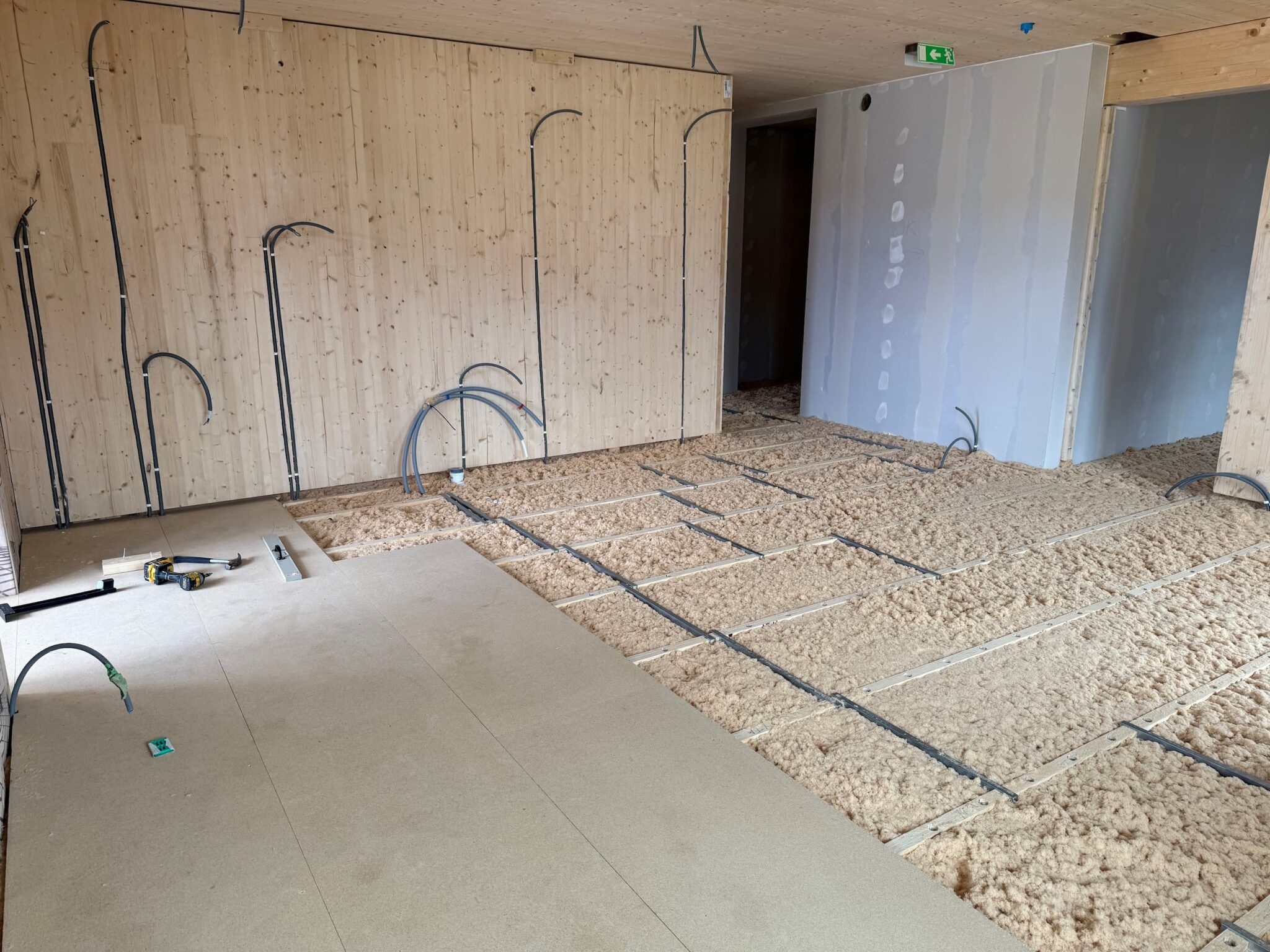
Impact sound travels vertically, and walls alone cannot solve that. The primary tool at Hyllie is the Granab floor, a Swedish-developed system that floats each apartment on its own isolated platform, physically decoupled from the CLT below. A room within a room. At ETC Hyllie, the Granab floor system uses wood wool insulation made from recycled sawdust in place of the gravel used in ETC Bygg's earlier projects, with boards made from recycled packaging adding the mass needed for low-frequency sound attenuation. Footsteps, a dropped object, a chair scraping: the energy loses most of its force at the separation gap. Flanking transmission, where sound enters a wall and travels sideways through the slab into the apartment above, is addressed through separation detailing at every junction. Fredrik Fagerberg describes straw walls as particularly effective at absorbing sound within the apartments themselves, though he notes the final result also depends on the surface finish applied. Certified acoustic consultants completed pre-handover measurements before residents moved in, as required by Swedish regulatory standards.
The one sound residents should expect
One last detail ETC tells every new resident about. In the months after completion, as CLT adjusts to the humidity of an occupied building, the timber can crack. A sharp, loud sound. Not structural. Not dangerous. But startling at two in the morning if nobody warned you. "It could worry somebody," Fredrik Fagerberg says. So they tell everyone beforehand. The cracking settles. The building is fine. It becomes, in his words, "a fun fact more or less."
Fire and acoustics look like different engineering problems. At Hyllie, they follow the same method: test it to verified standards, document it openly, choose nothing that compromises performance or environmental responsibility. The EcoCocon straw wall system is delivering measurable results on both counts in every apartment, every day. The residents feel it in the quiet and the warmth, without needing to think about the engineering underneath.
Common Questions
Does the building contain straw? Yes. EcoCocon straw wall panels form the building envelope.
Is loose straw used? No. The straw is industrially compressed to 115 kg/m³ and integrated into a prefabricated panel system.
Is fire safety assessed based solely on the straw? No. Fire performance is assessed at the level of the complete wall assembly and the complete building system.
What certifications does the EcoCocon panel carry? RE 45 / REI 45 / REW 45 as a standalone panel with diffusion-open membrane. The system achieves higher ratings with additional finish layers. Full fire test documentation is available through EcoCocon.