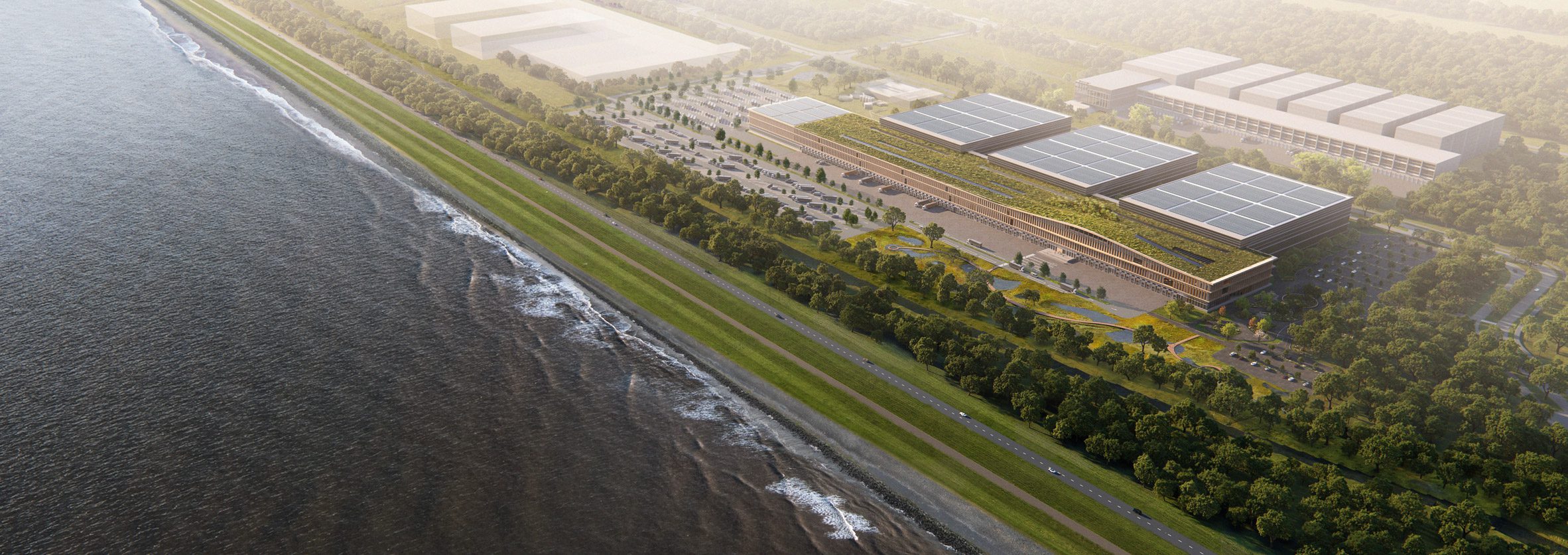
What once seemed science fiction is now becoming a reality. In Lelystad, Netherlands, a pioneering logistics center is rising from the ground, not in concrete, but in wood and over 40,000 m² of EcoCocon straw wall panels.
Logistics Center West, designed by Henning Larsen, is Europe’s largest timber logistics facility. It is by far the largest project to date using straw- a milestone we are incredibly proud of.
“This is not just a win for EcoCocon. It’s a win for every builder, architect, and developer who has believed in natural, bio-based construction,”
— Lars Keller, CEO, EcoCocon Denmark
Designing at the Edge of Innovation
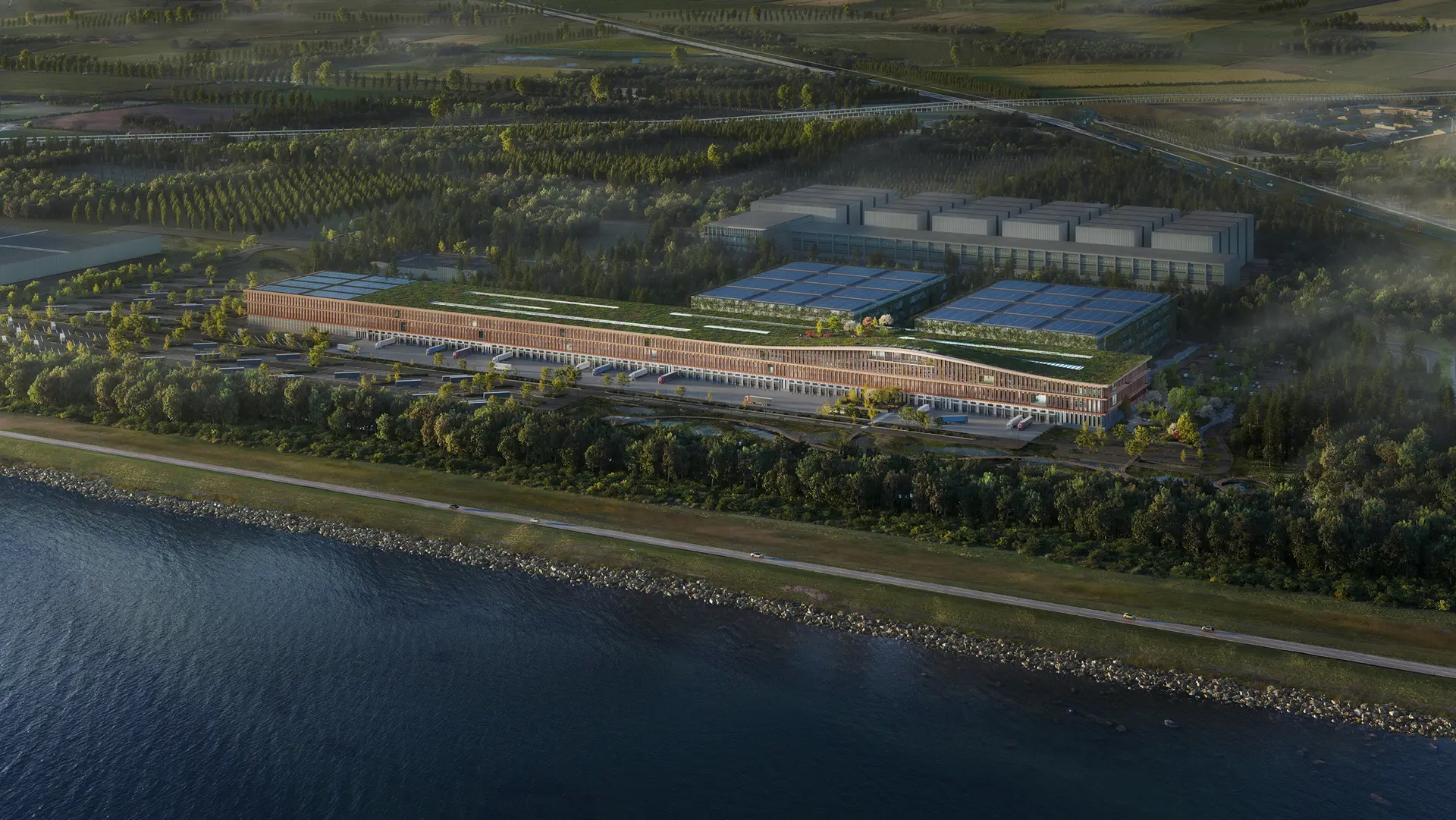
Logistics centers aren’t usually where you expect to find cutting-edge sustainability. But LCW is different. Here, performance meets purpose — and our prefabricated straw panels are central to that shift.
- 40,900 m² of straw wall panels supplied by EcoCocon
- 155,000 m² of total building area
- Designed for BREEAM Outstanding certification
- Integrated with 30,000 m² of solar panels and wetlands, forests, rooftop gardens
- Targeting biodiversity gains of at least +10%
Our panel system is made from 98% natural materials — including up to 89% straw, a rapidly renewable byproduct of agriculture — and is engineered to deliver airtightness, breathability, fire resistance (up to REI 120). It meets today’s toughest construction standards while remaining safe to biodegrade and return to nature at the end of the building’s life.
A Cultural Shift, Not Just a Technical One
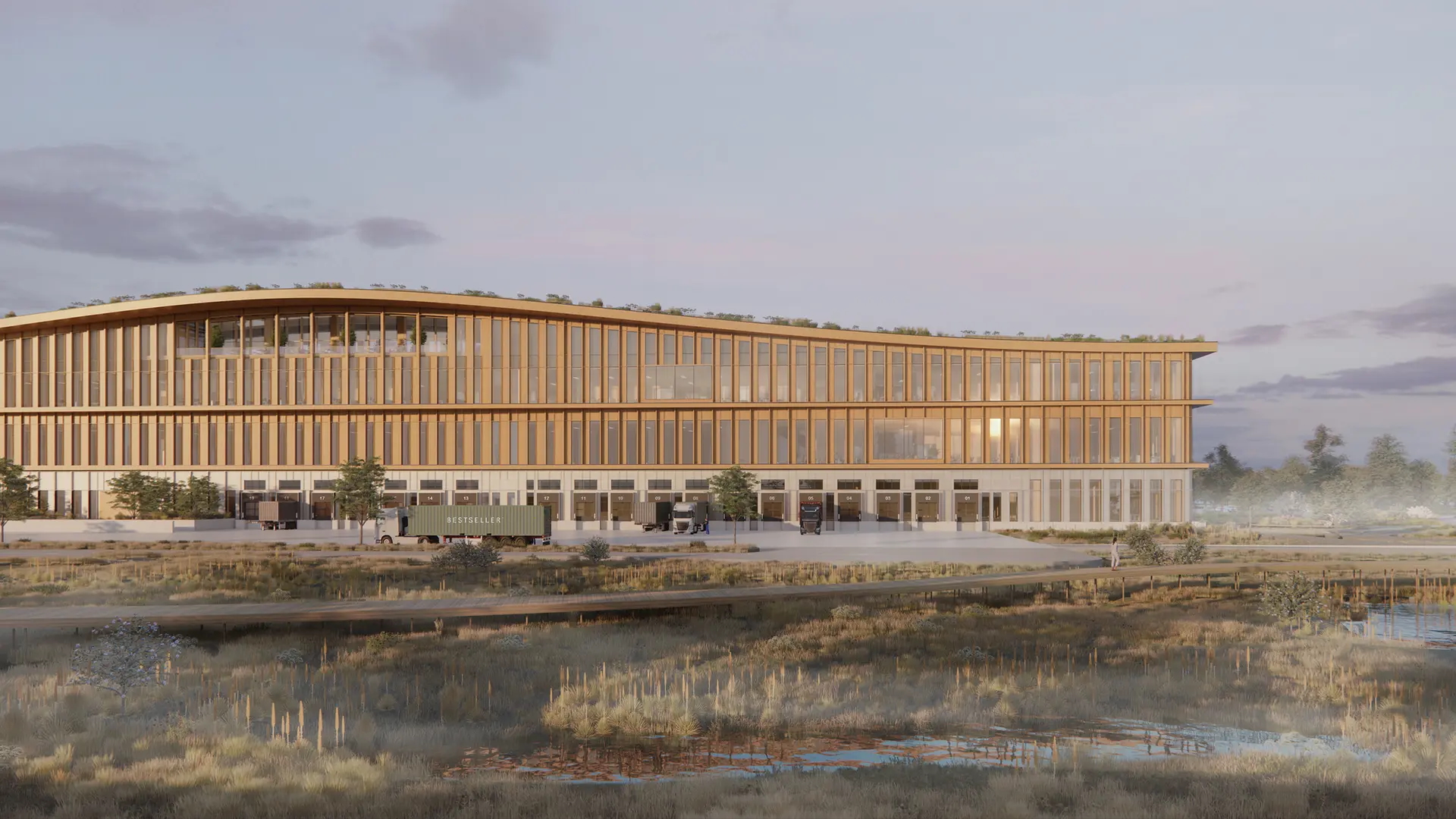
For us at EcoCocon, this project represents more than a technical success. It’s a cultural statement: a large-scale, functional building that refuses to compromise on health, ecology, or circularity.
“What excites me most is that LCW shows sustainability at scale. It brings together ambition, performance, and beauty in one of the most unlikely building typologies.”
— Petra Régnacq Trnková, Co-CEO, EcoCocon
Collaboration for a Regenerative Future
LCW would not be possible without the pioneering vision of Henning Larsen, whose architecture placed bio-based materials at the core of the project. Together with Ramboll’s engineering expertise and Bouwbedrijf van de Ven’s precise execution, this collaboration made it possible to turn an ambitious idea into a built reality.
But most importantly, it reflects the vision of a client willing to invest in a project that leads by example, proving that logistics infrastructure can be climate-forward and people-focused.
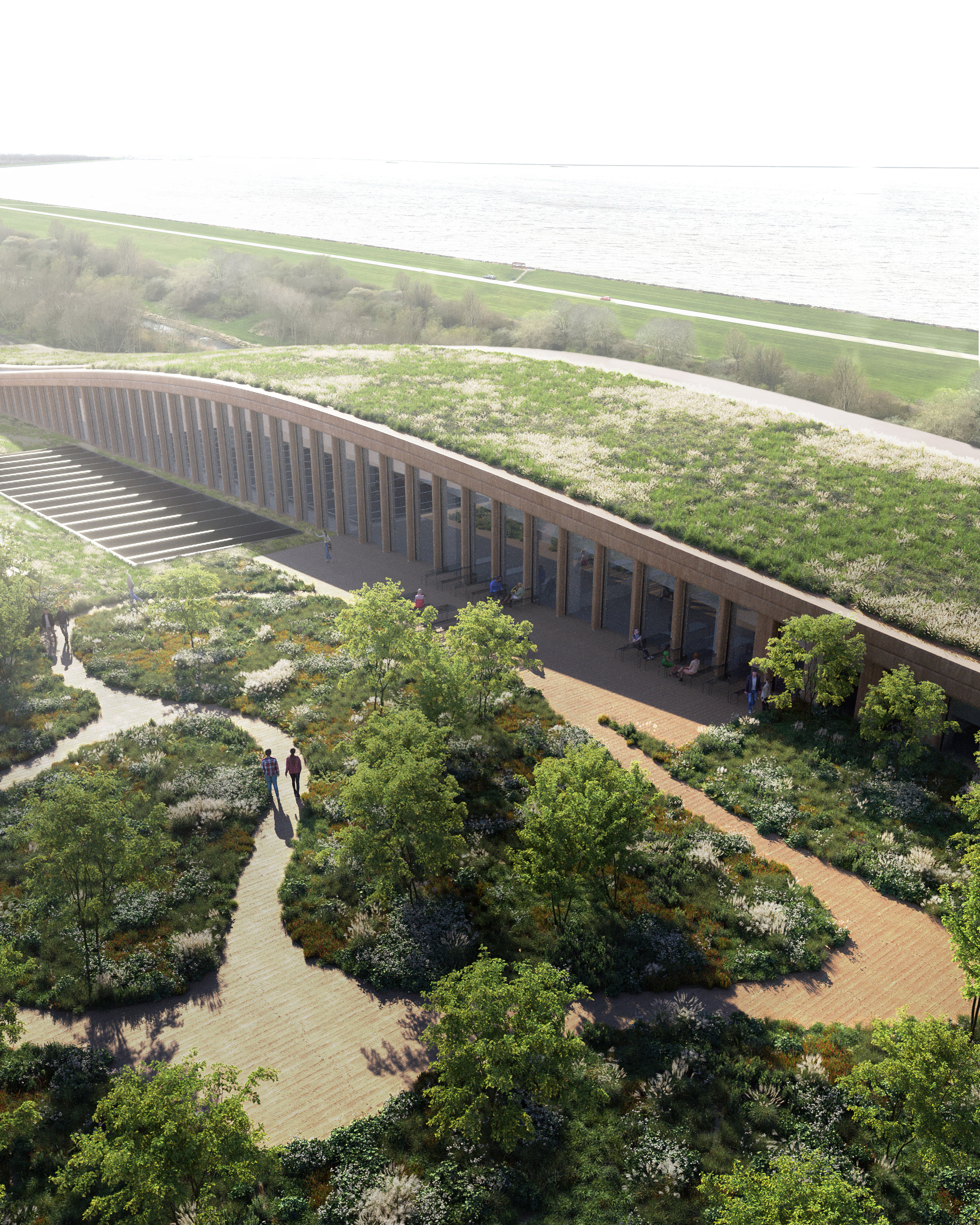
Inside, employees will work in naturally lit spaces, eat at a rooftop garden restaurant, and walk among wildflower meadows and educational boardwalks. Outside, more than 40% of the site is reserved for nature — a place where humans and biodiversity are both welcome.
What Comes Next?
This is Chapter 1 of our LCW story. In the coming months, we’ll take you behind the scenes of this landmark project — from assembly on site to the deeper design thinking behind each decision.
Follow along as we document the future taking shape — in timber, in straw, and in action.